Store a Suitcase Between Trips So It Is Ready to Use Again
Store luggage between trips through complete unpacking, appropriate cleaning, suitable support and conditions, clear accessory contents, and resolved faults.
This article may contain affiliate links. If you buy through them, we may earn a commission at no extra cost to you. Our disclosure and editorial approach.
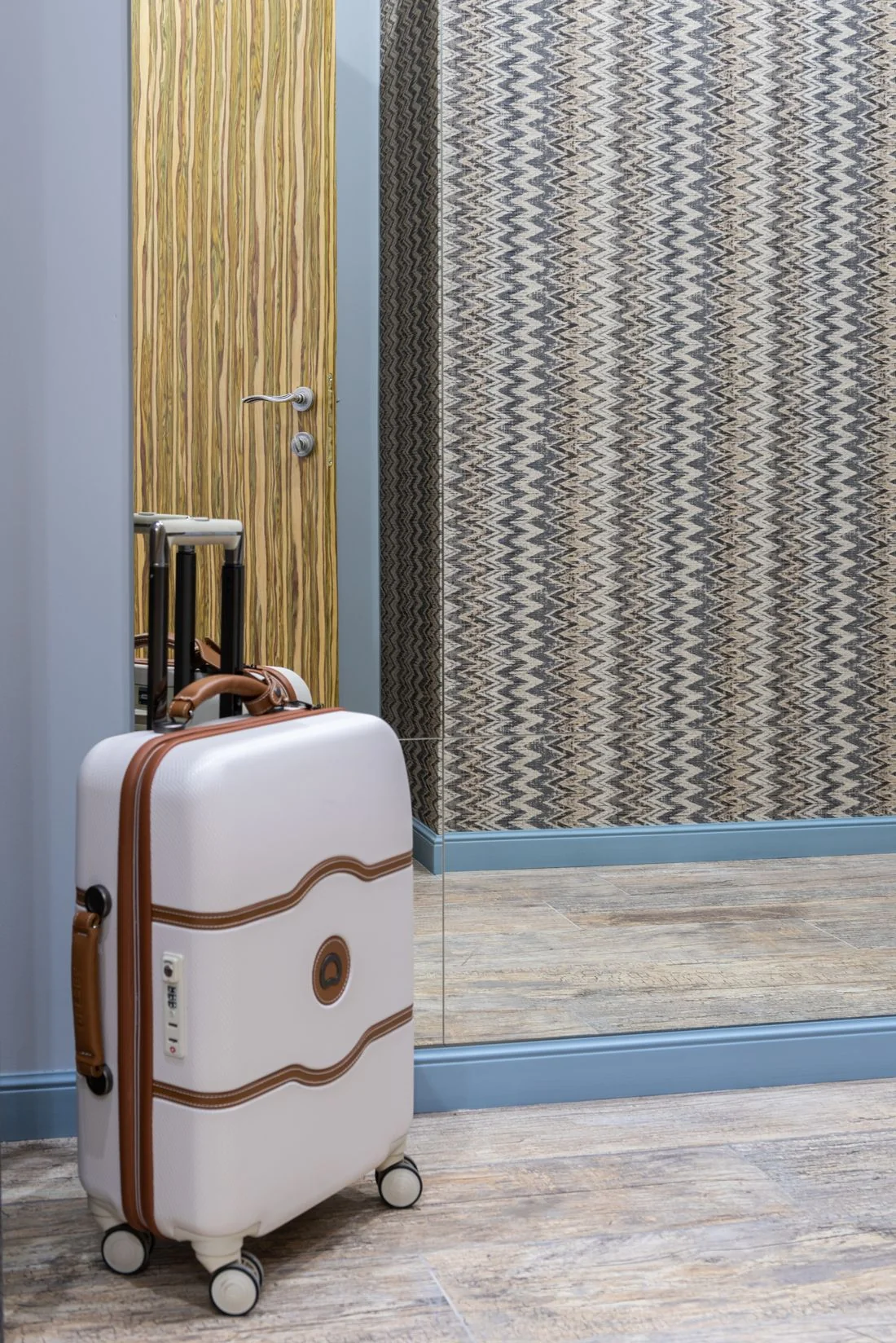
A suitcase can spend more time at home than traveling. Storing it appropriately protects its usefulness and prevents a last-minute discovery of damp lining, forgotten toiletries, or a sticking wheel. Begin with the case's care instructions and the space you actually have, rather than treating every empty bag as interchangeable cupboard storage.
Finish unpacking before storing
Check all compartments and remove food, liquids, documents, and personal essentials. Deal promptly with damp or dirty items through their appropriate care routes. A closed suitcase can hide an unfinished task for months. Empty-looking main space does not prove the small pockets are clear.
Inspect the case and clean it according to the maker's guidance. Do not apply a generic cleaning product or heat treatment without understanding suitability. Allow appropriate drying before storage. Keep useful model and service information somewhere you can find it if a fault needs attention.
Choose a suitable position
Follow storage guidance for the construction and materials. Consider moisture, pressure, temperature, and the way the bag is supported. A case fitted tightly under other heavy objects may experience a different load from ordinary use. Do not assume nesting or compression suits every bag.
Measure the available space and the route to retrieve it. An awkward high location can make handling difficult even when the suitcase technically fits. Use storage you can access appropriately and safely, obtaining suitable help where needed. Keep household routes and equipment clear.
Be selective about storing things inside
A suitcase can sometimes hold suitable clean travel accessories if that arrangement meets the relevant product instructions. Keep the contents modest and identifiable. Do not turn it into an archive of unrelated possessions that must be emptied across the bedroom before every trip.
Handle accessories according to their own requirements. Batteries, liquids, medication, and other special items need appropriate storage rather than an automatic permanent place inside luggage. The bag's usefulness as a container does not override those needs.
Resolve faults while there is time
If a zip, handle, or wheel needs assessment, record the problem and contact the maker or a suitable service. Do not store the bag with an unexplained fault and hope it disappears before departure. A concrete repair decision is easier without an imminent train or flight.
Check applicable service or warranty information directly. Similar-looking replacement parts are not automatically compatible. Keep work within verified guidance and appropriate competence rather than experimenting with a component that supports the loaded bag.
Do a brief pre-trip check
Take the case out early enough to inspect closures and ordinary handling before packing. Review the accessories stored inside and remove anything irrelevant to the coming journey. Confirm current carrier requirements separately; the fact that the bag worked on the last trip does not establish every new allowance.
Can I store smaller bags inside? Only when the arrangement suits their construction and care guidance. Should the suitcase remain open? Follow the maker's appropriate storage advice rather than a universal rule. What if storage is limited? Compare a suitable accessible arrangement with the luggage you genuinely use before buying another case.
Our personal-item bag guide helps edit the smaller travel load. The weekend reset after travel gives unpacking a manageable place in the return routine.
About this guide
Original editorial planning advice from Helene’s In Between, based on practical scenarios rather than a product test. We do not claim hands-on product testing or a sponsored trip. Photos illustrate the topic and do not document a product test.
Suggestions are general editorial ideas. Adapt them to your home, itinerary and preferences.